


目录
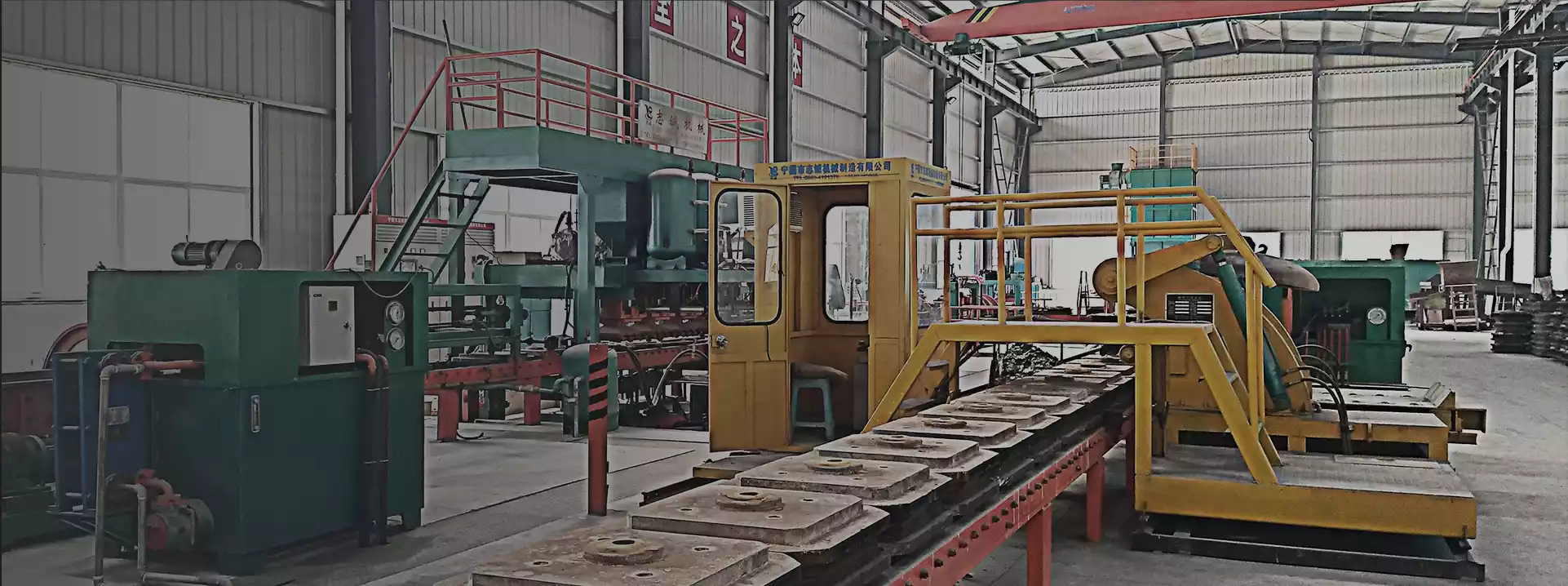
Fully automated grinding ball production lines are transforming manufacturing by reducing labor dependency, improving environmental compliance, and ensuring consistent product quality. As labor costs rise and regulations tighten, automation has become a strategic necessity for wear-resistant materials manufacturers worldwide.
The global grinding media industry is entering a new era where efficiency, sustainability, and digital control define competitiveness.
1. Rising Labor Costs Make Automation Inevitable
Manufacturing sectors worldwide are experiencing continuous wage growth and skilled labor shortages. Traditional grinding ball production relies heavily on manual processes such as:
- Mold preparation and casting supervision
- Furnace temperature adjustment
- Heat treatment timing control
- Manual sorting and packaging
These labor-intensive processes increase operational costs and create performance variability.
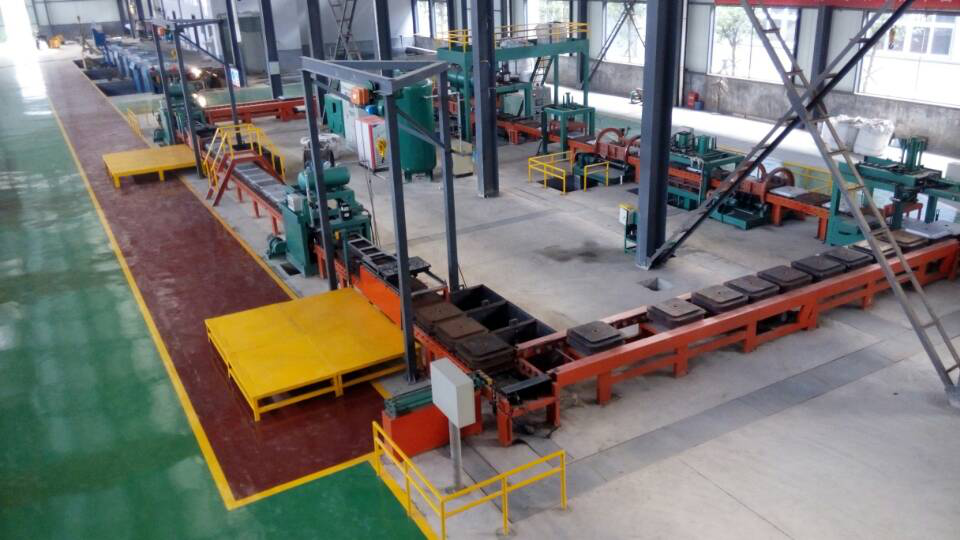
A fully automated grinding ball production line integrates:
- Automatic pouring systems
- Intelligent casting control
- Continuous automated heat treatment systems
- Online hardness and impact testing
- Automated sorting and packaging units
This transformation enables:
- 24/7 continuous production
- Reduced per-ton labor cost
- Higher productivity
- Lower human error rates
In a margin-sensitive industry, grinding ball production automation directly improves long-term cost competitiveness.
2. Environmental Regulations Accelerate Industry Restructuring
Environmental standards for foundries and heat treatment operations are becoming stricter globally. Many traditional workshops struggle with:
- Excess dust emissions
- Uncontrolled exhaust gases
- High energy consumption
- Inefficient thermal systems
Automated grinding ball manufacturing facilities are designed with:
- Centralized dust collection systems
- Exhaust gas treatment equipment
- Energy-efficient induction furnaces
- Smart energy monitoring systems
Digital temperature control and energy management significantly reduce carbon intensity and material waste.
Countries such as China have strengthened environmental inspections for heavy industries, accelerating the elimination of outdated production capacity. Similar regulatory pressure is increasing in developing industrial regions.
Automation enables compliance while enhancing operational sustainability.
3. Quality Stability Becomes the Core Competitive Factor
Mining and cement clients increasingly prioritize performance stability over lowest pricing.
Grinding balls must meet strict technical requirements:
- Controlled hardness range (HRC consistency)
- Stable impact toughness
- Uniform metallographic structure
- Low breakage rate
- Predictable wear rate
Fully automated production lines ensure precise control of chemical composition, pouring temperature, and heat treatment curves. Continuous quenching and tempering systems improve structural consistency across production batches.
In major mining markets such as Chile and Peru, buyers require long-term supply contracts with detailed quality documentation. Automation strengthens traceability and reproducibility—key factors for international procurement.
Stable quality reduces customer grinding media consumption per ton of ore, strengthening supplier relationships.
4. Digitalization Enables Smart Factory Transformation
Automation is evolving into intelligent manufacturing.
Modern intelligent casting production lines integrate:
- PLC centralized control systems
- Real-time thermal monitoring
- Automated defect detection technology
- Data acquisition and production analytics platforms
Data-driven manufacturing allows companies to monitor:
- Production efficiency
- Yield rate
- Energy consumption per ton
- Equipment maintenance cycles
- Raw material utilization
This enables predictive maintenance and lean production strategies. Instead of reacting to defects, manufacturers prevent them through continuous data feedback.
The transition toward smart factory grinding media production increases transparency, efficiency, and scalability.
5. Higher Entry Barriers Reshape Industry Competition
Fully automated grinding ball production lines require significant capital investment. However, long-term advantages include:
- Lower unit manufacturing cost
- Greater production scalability
- Stronger international competitiveness
- Improved brand positioning
Automation increases technical barriers, accelerating consolidation within the wear resistant materials manufacturing sector.
The competitive focus is shifting from price-based competition to:
- Quality consistency
- Technical reliability
- Environmental compliance
- Service capability
Manufacturers investing early in automation secure stronger market positioning.
6. Automation Is a Strategic Imperative, Not an Option
Rising labor costs and stricter environmental regulations are structural trends—not temporary challenges.
Grinding media producers that continue relying on manual-intensive processes face:
- Cost instability
- Compliance risk
- Quality fluctuation
- Limited scalability
Fully automated grinding ball production lines deliver:
- Higher efficiency
- Lower emissions
- Consistent and traceable quality
- Long-term cost control
In the global transition toward green and intelligent manufacturing, automation defines future industry leadership.
结论
Fully automated production lines are fundamentally reshaping the grinding ball manufacturing industry. By integrating intelligent casting, automated heat treatment systems, and digital monitoring, manufacturers achieve higher efficiency, better environmental performance, and superior product stability.
As global mining and cement industries demand higher-performance grinding media, automation becomes the foundation of sustainable competitiveness in the wear-resistant materials market.
Manufacturers that embrace intelligent production today will lead tomorrow’s global supply chain.
常问问题
What is a fully automated grinding ball production line?
A fully automated grinding ball production line is an integrated system that automates casting, heat treatment, testing, sorting, and packaging processes to ensure consistent quality and reduced labor dependency.
Why is automation important in grinding ball manufacturing?
Automation reduces labor costs, improves quality stability, ensures environmental compliance, and increases production efficiency.
How does automated heat treatment improve grinding ball performance?
Automated heat treatment systems precisely control quenching and tempering temperatures, improving hardness uniformity and reducing breakage rates.
Is grinding ball manufacturing moving toward smart factory models?
Yes. Many manufacturers are integrating PLC systems, real-time monitoring, and data analytics to create intelligent, smart factory production environments.