


Table of Contents
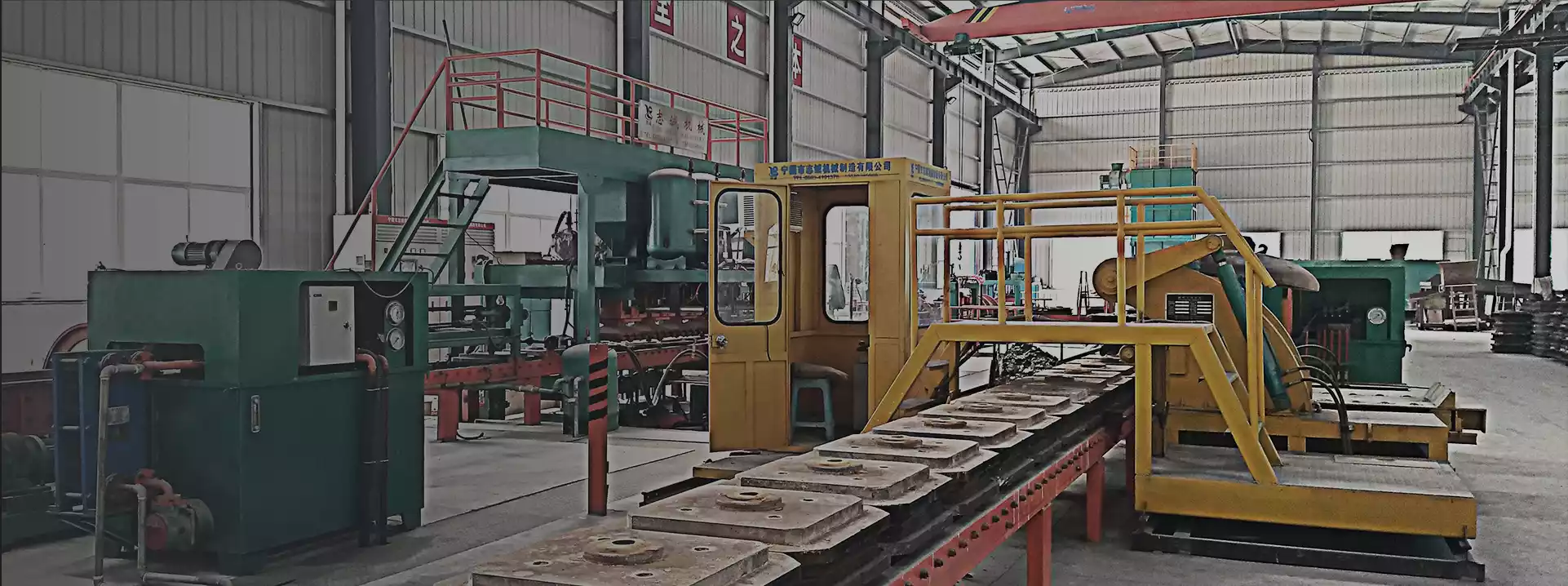
In a foundry, the positions of the furnace, treatment station, slagging area, and pouring machine are not always the same. Some workshops have a compact arrangement, while others require molten iron to travel a longer distance or move between equipment installed at different heights.
This is why a hot metal transfer system should not be selected simply by looking at its basic transport capacity. The system needs to fit the actual workshop layout, transfer route, production requirements, and connection points between different process stations.
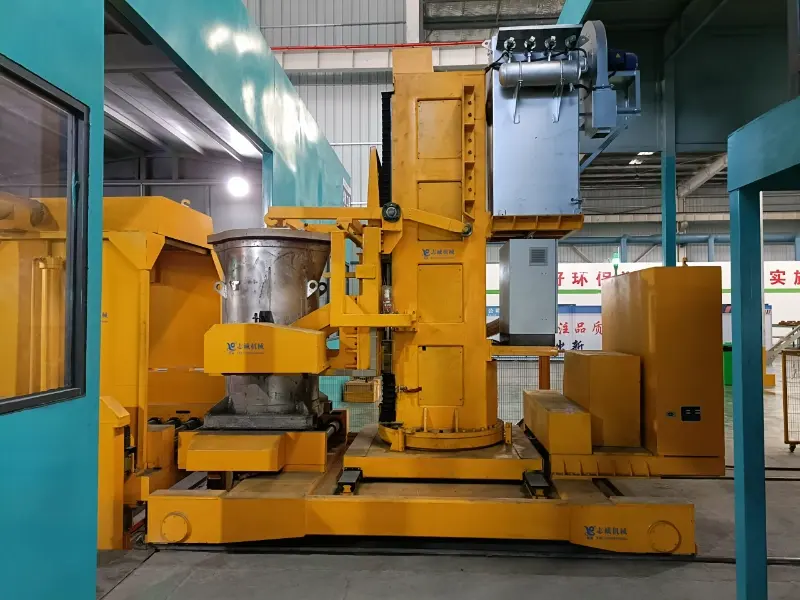
For foundries planning a new production line or upgrading an existing one, understanding how hot metal transfer equipment works with the workshop layout can make equipment selection more practical.
Why Does Workshop Layout Matter?
Molten iron normally passes through several stages before it reaches the pouring machine. Depending on the production process, the route may involve the melting furnace, molten iron receiving position, spheroidizing station, slagging station, and pouring equipment.
When these stations are close to one another, a relatively compact transfer arrangement may be enough. When they are separated by a longer distance, the transfer system needs to provide a suitable travel route while maintaining stable operation.
A transfer system that does not match the workshop layout can result in unnecessary movement, difficult equipment connections, or additional manual handling. It may also make maintenance more difficult later.
For this reason, transfer equipment should be considered as part of the complete casting line rather than as an isolated machine.
Common Workshop Layouts and Transfer Considerations
Different casting workshops can have very different space and equipment arrangements. The following table shows some common situations.
| Workshop Layout | Main Challenge | Transfer Consideration |
| Compact layout | Equipment is positioned close together | Short and efficient transfer route |
| Long-distance layout | Furnace and pouring equipment are far apart | Stable movement over a longer route |
| Multi-station layout | Several process stations need to be connected | Flexible movement between stations |
| Different equipment heights | Equipment is installed at different levels | Lifting or height adjustment |
| Automated production line | Equipment needs coordinated operation | Automatic signal and equipment connection |
| Existing workshop | Limited space for major changes | Customized design based on existing conditions |
There is no single configuration that works equally well for every foundry. The right arrangement depends on the physical layout and production process.
1. Compact Workshops Need an Appropriate Transfer Route
In a compact casting workshop, the furnace, treatment station, and pouring machine may be located relatively close together.
A shorter transfer route can reduce unnecessary movement and make the overall process easier to manage. However, a compact layout still requires attention to equipment height, ladle position, and the connection point of the pouring machine.
For example, if the furnace platform is at a different height from the receiving position, the transfer equipment may need lifting and lowering functions. This can be particularly useful when the system is being installed in an existing workshop.
The purpose is not simply to reduce the distance between two points. The transfer route needs to match the working positions of the equipment involved.
2. Long-Distance Layouts Require Stable Movement
Some foundries have a larger production area, with the melting furnace located away from the treatment or pouring section.
In this situation, hot metal transfer equipment needs to provide a stable and practical transport route between different stations. The distance should be considered together with the production cycle and transfer frequency.
Before selecting equipment, it is useful to check:
- How far does the molten iron need to travel?
- How many stations need to be connected?
- Where is the pouring machine located?
- Is an intermediate transfer stage required?
- How frequently does the transfer cycle need to be repeated?
These details can have a direct effect on the required equipment configuration.
3. Equipment Height Can Affect the System Design
Different casting workshops may have different platform heights.
A furnace can be installed above or below the receiving position of the transfer system, while the pouring machine may have its own required inlet height. If these positions do not match, the transfer system needs to compensate for the difference.
An automatic hot metal transfer system can be configured with functions such as lifting and lowering to suit different working positions.
This is particularly useful when upgrading an existing foundry. Instead of changing the entire workshop layout, the transfer equipment can be designed around the existing furnace, pouring machine, and other fixed equipment.
4. Multi-Station Layouts Require Better Coordination
A more complex casting workshop may contain several connected process stations.
For example, molten iron may move from the furnace to a spheroidizing station, then pass through a slagging process before reaching the pouring machine.
In this type of arrangement, the transfer system needs to coordinate movement between different stations rather than simply carry a ladle from one location to another.
The product configuration supports automatic molten iron receiving and weighing, while also allowing connection with the spheroidizing station and the molten iron calling signal from the casting machine.
This type of coordination can help the transfer process fit more naturally into an automated casting operation.
5. Existing Workshops Often Need Customized Equipment
Designing a transfer system for a new workshop is usually more straightforward because equipment positions can be planned from the beginning.
Existing foundries may have more limitations, such as:
- Fixed furnace locations
- Existing pouring machines
- Limited floor space
- Established transport routes
- Fixed treatment stations
- Different equipment heights
In these cases, standard equipment may not always fit the actual working environment.
A customized hot metal transfer system can instead be designed according to the workshop layout and casting production line. The transfer route, equipment connection points, lifting requirements, and transport method can all be considered during the design stage.
This approach is particularly useful for foundries that want to improve material handling without completely rebuilding their existing production area.
How Does Transfer Method Affect Workshop Layout?
The workshop layout can also influence which transfer method is more suitable.
Depending on the production arrangement, different approaches can be considered, including double-ladle direct transport and intermediate-ladle transfer.
| Transfer Method | Suitable Consideration |
| Double-ladle direct transport | Suitable when the process allows a relatively direct transfer route |
| Intermediate-ladle transfer | Useful when additional process stages need to be included |
| Customized arrangement | Suitable for unusual workshop layouts or existing equipment |
The choice should be based on the complete material flow instead of transfer distance alone.
For example, a direct route may be practical in a compact workshop, while a more complex arrangement may be better when several treatment or pouring stages need to be coordinated.
What Should Be Checked Before Choosing Hot Metal Transfer Equipment?
Before purchasing hot metal transfer equipment, foundry operators should look at the actual workshop rather than relying only on a standard equipment specification.
1. Check Equipment Positions
Measure the locations and working heights of the furnace, treatment station, slagging area, and pouring machine.
2. Confirm the Transfer Route
Determine where the ladle needs to travel and whether existing structures or equipment will affect movement.
3. Determine the Required Transfer Method
Consider whether direct transport or intermediate transfer is better suited to the production process.
4. Review Automation Requirements
If the existing production line uses automatic pouring equipment or signal-based control, the transfer system should be able to work with these processes.
5. Consider Future Expansion
If production capacity may increase later, it is worth considering whether the transfer route and equipment arrangement can accommodate future changes.
A detailed evaluation at this stage can reduce the need for expensive modifications after installation.
How Can a Customized Transfer System Fit Different Foundries?
Customization does not necessarily mean adding more functions. More importantly, it means configuring the equipment around the actual production environment.
For one foundry, the main requirement may be a longer transfer route. For another, the challenge may be limited space or different equipment heights. A third foundry may need closer coordination between the transfer system, treatment station, and pouring machine.
A properly designed automatic hot metal transfer system can take these factors into account instead of forcing every workshop to use the same configuration.
The system can be arranged around existing equipment positions and the required production flow, helping the transfer process become a more integrated part of the casting line.
Why Choose an Experienced Foundry Equipment Manufacturer?
When a transfer system needs to work with several existing machines, the manufacturer’s experience becomes an important consideration.
Ningguo Zhicheng Machine Manufacturing Co., Ltd. focuses on the research and development, manufacturing, and sales of casting equipment, heat treatment equipment, casting molds, and environmental protection equipment. The company also develops customized equipment according to different production requirements.
For projects where the furnace, treatment station, and pouring machine already have fixed positions, experience with complete foundry equipment can be useful when determining the transfer route and equipment configuration.
Frequently Asked Questions
1. Can a Hot Metal Transfer System be designed for an existing casting workshop?
Yes. The system can be designed according to the existing workshop layout, equipment positions, and casting production line requirements. This makes customized configuration possible when the workshop cannot be completely redesigned.
2. Can the system work with different equipment heights?
Yes. Depending on the layout, lifting and lowering functions can be included to help match different working positions.
3. What factors affect the choice of transfer method?
Workshop size, transfer distance, equipment positions, process stages, and the connection between the transfer system and pouring equipment can all affect the choice.
4. Can an Automatic Hot Metal Transfer System connect with other casting equipment?
Yes. The system can be configured to coordinate with related process stations and respond to molten iron calling signals from casting equipment.
5. Is customized Hot Metal Transfer Equipment suitable for large foundries?
It can be. The appropriate configuration depends on the production capacity, workshop layout, transfer route, and number of connected process stations. A customized design can be considered when a standard arrangement does not fit the production environment.
Final Thoughts
Casting workshops rarely have exactly the same layout. Furnace positions, equipment heights, transfer distances, treatment stations, and pouring equipment can all vary from one foundry to another.
Therefore, selecting a hot metal transfer system should start with the actual production environment. By reviewing the workshop layout, transfer route, equipment positions, automation requirements, and future expansion plans, foundries can choose a configuration that fits their operation more effectively.
For projects that require customized transfer equipment, working with an experienced manufacturer can also make it easier to coordinate the transfer system with the rest of the casting line. Ningguo Zhicheng Machine Manufacturing Co., Ltd. provides foundry equipment and customized equipment solutions based on different workshop and production requirements.